
Many people hear the rumor that there is a fortune hidden inside their old electronics, specifically asking how much gold is in a computer motherboard. It is a compelling idea—that the junk drawer full of obsolete hardware is actually a miniature gold mine waiting to be tapped.
While the reality is far less lucrative than the myth suggests, there is indeed a measurable amount of precious metal contained within these complex devices. Understanding the composition of a motherboard requires a look at how modern electronics are manufactured and why gold is used in the first place.
Why Gold Is Used in Computer Motherboards
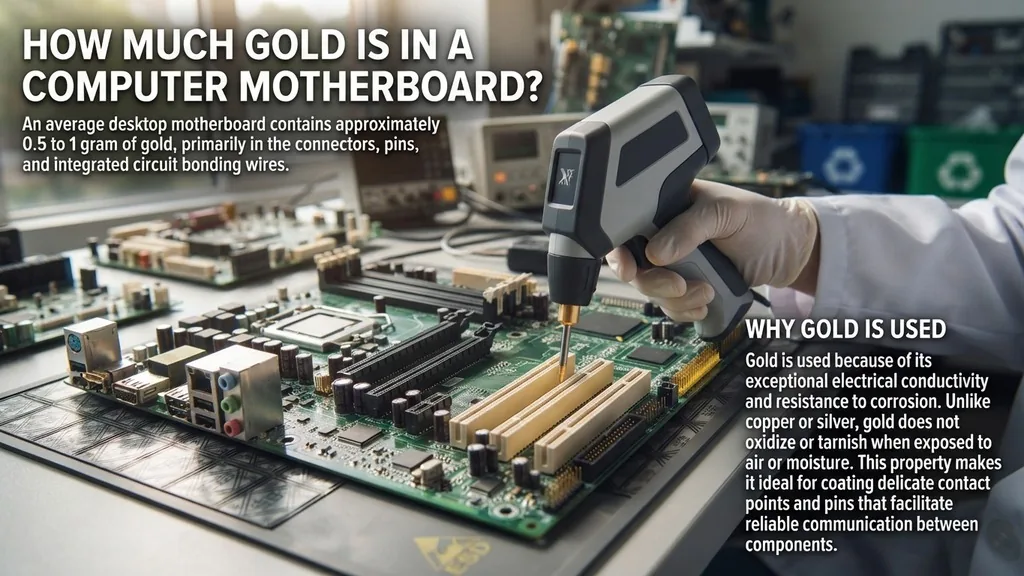
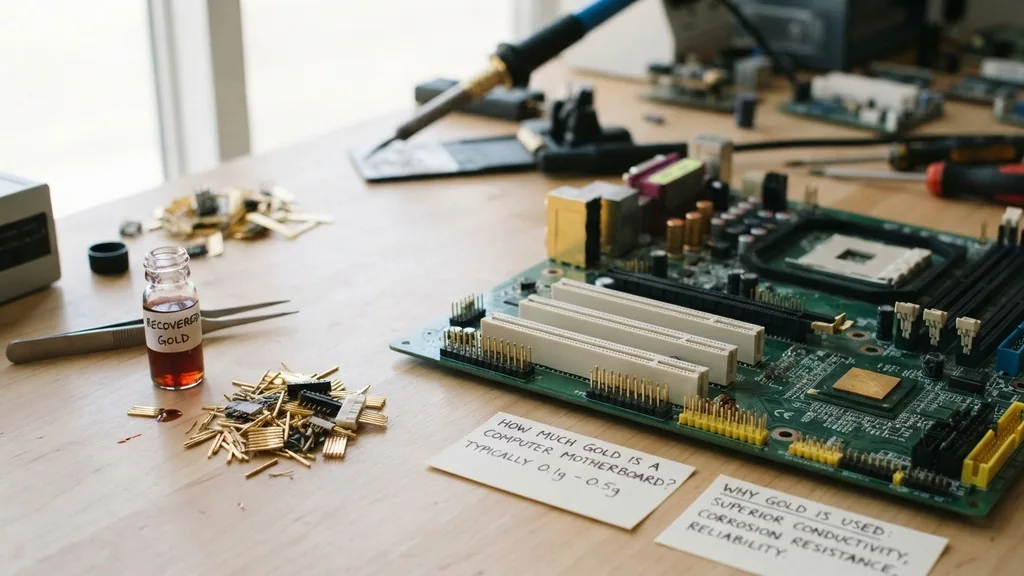
Gold is used in computer motherboards because of its exceptional electrical conductivity and resistance to corrosion. Unlike copper or silver, gold does not oxidize or tarnish when exposed to air or moisture. This property makes it ideal for coating the delicate contact points and pins that facilitate communication between various components.
When you look at a motherboard, you are seeing a sophisticated network of pathways. If these pathways were to corrode, the electrical signal would degrade, leading to system crashes or total hardware failure.
Engineers rely on gold plating to ensure long-term reliability. Even a microscopic layer of gold, often just a few microns thick, provides a stable, high-conductivity interface. This is particularly important for the contact fingers on expansion cards and the pins on central processing units.
While other metals could conduct electricity just as well, they would quickly fail in environments where humidity and temperature fluctuations are present. Gold remains the gold standard for high-performance electronics, ensuring that your computer runs smoothly for years.
Estimating the Gold Content in a Single Motherboard
On average, a standard consumer-grade computer motherboard contains roughly 0.01 to 0.05 grams of gold. If you translate that into current market value, you are looking at a very small fraction of a dollar.
The amount varies significantly depending on the age of the board, the manufacturer, and the specific architecture of the device. Older motherboards, particularly those manufactured in the 1990s and early 2000s, often contain more precious metal because the industry had not yet perfected the methods for reducing gold usage through precision plating.
Modern boards are designed for extreme efficiency. Manufacturers have spent decades optimizing the amount of gold used, moving toward thinner plating and selective application.
A server motherboard from a high-end data center will typically contain more gold than a budget desktop motherboard because servers require higher durability and more robust connectivity across their numerous expansion slots and memory banks. If you were to harvest the gold from a single average desktop board, you would find it difficult to even cover the cost of the chemicals required for the extraction process.
The Role of CPUs and RAM in Precious Metal Recovery
While the motherboard is the foundation, it is not the only source of gold in a computer system. In fact, the CPU and RAM are often more concentrated sources of precious metals.
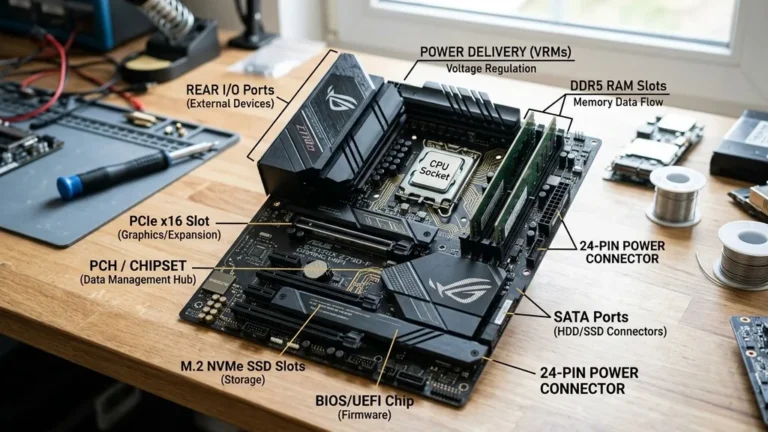
The CPU pins, which are often gold-plated, and the internal bond wires of the integrated circuit (IC) represent a significant portion of the total gold content in a computer. Similarly, the contact fingers on memory modules (RAM) are heavily plated with gold to ensure a perfect connection every time they are inserted into a DIMM slot.
When you look at the total value of a computer, you must aggregate these parts. A processor chip can contain a surprising amount of gold compared to its small physical size. This is due to the high density of gold-bonded wires inside the chip package.
When e-waste recycling facilities process scrap electronics, they rarely treat the motherboard in isolation. Instead, they strip the board of its high-value components—the CPU, RAM, and various gold-rich connectors—and process them separately to maximize the yield of precious metal refining.
Factors Influencing Gold Yield in Scrap Electronics
The yield of gold from scrap electronics is dictated by several variables, including the era of production and the intended use of the hardware. To put this in perspective, consider the following factors that influence how much gold you might recover:
- Manufacturing Era: Older hardware generally has thicker gold plating, as modern manufacturing techniques allow for thinner, more precise applications.
- Component Density: Servers and high-performance workstations have more slots and more complex circuits, leading to a higher concentration of gold-plated connectors.
- Form Factor: Smaller devices like laptops often have highly integrated components, which can be harder to process and may contain less gold than a full-sized ATX desktop motherboard.
- Board Quality: High-end gaming motherboards frequently feature more robust gold plating on PCIe slots and RAM sockets to satisfy the demands of enthusiasts and overclockers.
These variables explain why simply weighing a motherboard is not an accurate way to guess its gold content. You must consider the surface area of the gold-plated contacts and the number of integrated circuits present on the board. A motherboard with eight RAM slots and four PCIe x16 slots will almost always yield more gold than a basic board with only two RAM slots and a single PCIe slot.
The Complex Process of Precious Metal Refining
Extracting gold from a computer motherboard is a dangerous and highly technical process. It is not something that can be done safely in a kitchen or a garage. Professional precious metal refining involves crushing, burning, and chemical leaching.
The primary method often cited is the use of aqua regia, a highly corrosive mixture of nitric acid and hydrochloric acid. This mixture dissolves the gold, allowing it to be filtered out of the remaining base metals and plastic debris.
Beyond the acid, the process requires handling hazardous chemicals that produce toxic fumes. If not managed in a professional facility with proper ventilation and environmental safeguards, these fumes can cause severe respiratory damage. Furthermore, the byproduct of this process is a toxic sludge that must be disposed of according to strict environmental regulations.
The reality of e-waste recycling is that it requires significant infrastructure to be both profitable and safe. Without industrial-grade equipment, the cost of the reagents alone will far exceed the value of the gold recovered.
Comparing Gold Content Across Computer Parts
To better understand where the value lies, it is helpful to look at the relative yields of different components. The following table provides an estimated comparison of where gold is concentrated in a typical desktop computer system.
| Computer Component | Relative Gold Content | Ease of Extraction |
|---|---|---|
| CPU (Processor) | High | Moderate |
| RAM Modules | Medium-High | High |
| Motherboard | Low | Low |
| Hard Drive (PCB only) | Low | Low |
| Expansion Cards | Medium | Moderate |
As the table shows, the motherboard itself is actually one of the least efficient parts to target if your goal is gold recovery. The gold is spread out over a large surface area, often trapped under layers of resin, solder mask, and other base metals.
In contrast, RAM modules have clean, accessible contact fingers that are easily removed. This is why professional recyclers focus on “high-grade” boards and components, leaving the low-grade base boards for bulk mechanical shredding and smelting.
Environmental and Economic Impacts of E-waste Recycling
The global e-waste recycling industry plays a vital role in recovering materials that would otherwise end up in landfills. When we talk about how much gold is in a computer motherboard, we are really talking about the broader issue of resource conservation.
Gold is a finite resource, and mining it from the earth is an energy-intensive and environmentally destructive process. By recovering gold from scrap electronics, we reduce the demand for primary gold mining and lower the overall carbon footprint of the tech industry.
However, the economics of this are fragile. The gold market value fluctuates daily, and the cost of labor and environmental compliance is high. When gold prices are low, many recycling operations become unprofitable.
This is why so much e-waste is unfortunately exported to countries with less stringent environmental regulations. In these regions, informal recycling methods often lead to the poisoning of local water supplies and the exposure of workers to lead, mercury, and other heavy metals found on printed circuit boards. Sustainable recycling requires a shift toward automated, clean technologies that prioritize safety and recovery efficiency.
Answering the Topical Gaps: Is It Worth the Effort?
A common question is whether the average person should attempt to extract gold from their old computer parts. The short answer is no.
For a hobbyist, the effort required to gather enough motherboards to produce even a single gram of gold—which requires dozens or even hundreds of boards—is immense. You would spend more money on safety gear, chemicals, and electricity than you would earn from the resulting gold.
The real value in e-waste is not in individual boards, but in the scale of the operation. Professional refiners process tons of material at once. They use mechanical separators to pull out the high-value components and then use chemical or smelting processes on a massive scale.
If you have a pile of old electronics, the most environmentally and economically sound approach is to take them to a certified e-waste recycling center. They have the equipment to handle the hazardous materials properly and the infrastructure to ensure that every ounce of precious metal is recovered and put back into the supply chain.
Frequently Asked Questions
- Is it worth extracting gold from circuit boards at home? No, it is not cost-effective or safe. The process involves hazardous chemicals like aqua regia and produces toxic fumes. The small amount of gold recovered from a single motherboard is not worth the risk to your health or the high cost of the necessary chemical supplies.
- Which part of the computer contains the most gold? The CPU (processor) and the RAM modules typically contain the highest concentration of gold. The gold is used in the pins of the CPU and the contact fingers of the RAM sticks to ensure high-quality electrical conductivity and to prevent long-term corrosion of the connection points.
- How many motherboards do you need to get one gram of gold? It varies by the age and quality of the boards, but you would likely need anywhere from 30 to 100 motherboards to yield one gram of gold. Because of the variation in manufacturing, there is no single constant, but it is always a significant volume of scrap material.
- What happens to the base metals in a motherboard during recycling? In professional recycling, base metals like copper, aluminum, and iron are separated from the precious metals. These are usually melted down and recycled into new industrial products. This recovery of base metals is often more important for the profitability of the recycling facility than the gold itself.