

Which LGA 1151 board fits your build? Chipset generations, motherboard sizes, memory limits, and storage support make the answer less simple than it first appears. The best lga 1151 motherboards serve different needs, from practical office upgrades to older gaming systems with plenty of life left.
This comparison brings compatibility and long-term usefulness into focus, helping you weigh the key differences before spending money. Keep reading for a clear guide to the available options.
Key Takeaways
- Confirm the motherboard chipset and CPU generation match your processor before checking any other specification.
- Choose the correct form factor, especially if your case supports only Micro ATX or requires a full ATX board.
- Check the maximum DDR4 capacity and speed, since memory limits vary across H110, B360, B365, and Z390 models.
- Prioritize M.2 support if faster solid-state storage matters, and verify whether the slot supports NVMe, SATA, or both.
- Select a Z390 board for overclocking support, while B-series and H-series boards suit standard, locked Intel processors.
| Balanced Office Builder | ASUS Prime B360M-A DDR4 | M.2 storage support | USB 3.1 Gen 2 | Aura Sync header | View on Amazon | Read Review | |
| Compact Legacy Platform |  |
ASUS H110M-C DDR4 | Compact micro ATX design | DDR4 memory support | Straightforward platform | View on Amazon | Read Review |
| Budget Storage Upgrade |  |
MACHINIST H110 NVMe | NVMe M.2 support | Broad CPU compatibility | DDR4 support | View on Amazon | Read Review |
| Mainstream Coffee Lake | 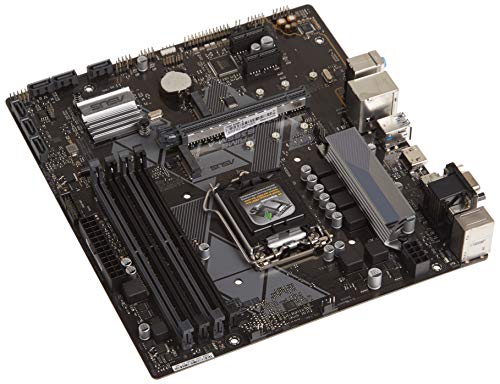 |
ASUS Prime B365M-A DDR4 | 8th/9th Gen support | M.2 storage slot | HDMI connectivity | View on Amazon | Read Review |
| Broad Compatibility Pick |  |
SHANGZHAOYUAN H110 M.2 | NVMe and NGFF support | PCIe x16 slot | Broad listed CPU range | View on Amazon | Read Review |
| Home Design Workhorse |  |
Serounder B365M 32GB | Supports up to 32GB | DVI display output | Compact micro ATX design | View on Amazon | Read Review |
| Gaming Focused Micro ATX |  |
MSI B360M Mortar DDR4 | Gaming-focused micro ATX layout | Coffee Lake platform | Onboard graphics support | View on Amazon | Read Review |
| Expandable Creator Platform |  |
MSI Z390-A PRO DDR4 | Full ATX expansion | M.2 and USB 3.1 | Dual Gigabit LAN | View on Amazon | Read Review |
| Minimalist Skylake Base |  |
MSI H110M Pro-D DDR4 | Compact micro ATX layout | Skylake platform support | DDR4 memory support | View on Amazon | Read Review |
| Enthusiast Gaming Expansion |  |
MSI Z390 Gaming Carbon | Enthusiast ATX layout | SLI and CFX support | M.2 storage support | View on Amazon | Read Review |
More Details on Our Top Picks
-
ASUS Prime B360M-A DDR4
For a practical Intel desktop, the ASUS Prime B360M-A gives you a sensible mix of mATX expansion, DDR4 memory, and everyday connectivity. Its M.2 support, HDMI output, SATA 6Gbps ports, and USB 3.1 Gen 2 make it a strong fit for home, office, and moderate gaming builds.
The Aura Sync RGB header adds a little visual customization without turning the board into a light show with a motherboard attached. The main limitation is platform age, since B360 is built around 8th Gen Intel processors and does not offer CPU overclocking.
- Brand:ASUS
- Form Factor:Micro ATX
- Chipset:Intel B360
- CPU Support:8th Gen Intel
- Memory:DDR4 2666MHz
- Storage:M.2, SATA 6Gbps
- Additional Feature:HDMI video output
- Additional Feature:Intel Optane ready
- Additional Feature:Aura Sync RGB header
-
ASUS H110M-C DDR4
Choose this ASUS board for a compact Intel build based on the H110 platform, especially when a straightforward feature set matters more than modern expansion. The micro ATX layout saves space, while DDR4 support keeps the system aligned with a relatively efficient memory standard.
Its appeal is simple, dependable functionality for compatible LGA 1151 processors, with fewer extras to complicate a basic office or home computer. The trade-off is the older H110 chipset, which limits expansion and storage options compared with B360, B365, or Z390 boards.
- Brand:ASUS
- Form Factor:Micro ATX
- Chipset:Intel H110
- CPU Support:LGA 1151
- Memory:DDR4
- Additional Feature:CSM motherboard design
- Additional Feature:Intel LGA 1151 socket
- Additional Feature:Space-conscious layout
-
MACHINIST H110 NVMe
The MACHINIST H110 is aimed at builders assembling an affordable system around 6th or 7th Gen Intel CPUs. Its combination of DDR4, NVMe or SATA M.2 support, and SATA 6Gbps connectivity gives older hardware a useful path toward faster storage.
You also get a PCIe 2.0 platform and support for Core i3, i5, i7, Pentium, and Celeron processors, which covers a broad set of compatible chips. The clear limitation is the older H110 chipset, particularly its reduced PCIe bandwidth and modest upgrade headroom.
- Brand:MACHINIST
- Chipset:Intel H110
- CPU Support:6th/7th Gen Intel
- Memory:DDR4
- Storage:NVMe/SATA M.2
- Additional Feature:PCIe 2.0 interface
- Additional Feature:SATA 6Gbps ports
- Additional Feature:Pentium and Celeron support
-
ASUS Prime B365M-A DDR4
With support for 8th and 9th Gen Intel processors, the ASUS Prime B365M-A suits a mainstream desktop that needs current-for-its-generation compatibility without moving to an enthusiast chipset. The board includes DDR4 2666MHz support, M.2 storage, HDMI, and SATA 6Gbps connectivity.
Its micro ATX format works well in smaller cases, while the Aura Sync header gives you an easy route to coordinated lighting. B365 does not provide CPU multiplier overclocking, so this is better for standard-clock processors than ambitious performance tuning.
- Brand:ASUS
- Form Factor:Micro ATX
- Chipset:Intel B365
- CPU Support:8th/9th Gen Intel
- Memory:DDR4 2666MHz
- Storage:M.2, SATA 6Gbps
- Additional Feature:Aura Sync RGB header
- Additional Feature:Intel LGA 1151 socket
- Additional Feature:Compact micro ATX layout
-
SHANGZHAOYUAN H110 M.2
This SHANGZHAOYUAN board targets builders who want wide processor compatibility in a low-cost LGA 1151 platform. The listing identifies support for selected 6th through 9th Gen Core i3 and i5 chips, along with Pentium and Celeron processors, plus DDR4 and PCIe x16 support.
NVMe or NGFF M.2 storage and SATA 6Gbps give the system useful drive options, while HDMI-Compatible and VAG outputs are listed for display connectivity. Because the H110 platform was not originally designed for every generation listed, confirm the CPU and BIOS pairing before purchase, as compatibility may depend on board revision.
- Brand:SHANGZHAOYUAN
- Chipset:Intel H110
- CPU Support:Listed 6th-9th Gen
- Memory:DDR4
- Storage:NVMe/NGFF M.2
- Additional Feature:SATA 6Gbps connectivity
- Additional Feature:HDMI-Compatible output
- Additional Feature:VAG output listed
-
Serounder B365M 32GB
For a compact home or design computer, the Serounder B365M D2VX SI focuses on 8th and 9th Gen Intel support and a modest, practical memory setup. Two DDR4 slots support up to 32GB, which is enough for everyday productivity, light creative work, and many gaming builds.
The DVI output helps with older displays, and the micro ATX format fits smaller cases without giving up the core LGA 1151 platform. Two memory slots leave less room for future expansion than four-slot boards, so choose your memory capacity with some care.
- Brand:Serounder
- Form Factor:Micro ATX
- Chipset:Intel B365
- CPU Support:8th/9th Gen Intel
- Memory:DDR4, 32GB
- Additional Feature:Two DDR4 slots
- Additional Feature:DVI video output
- Additional Feature:LGA 1151 socket
-
MSI B360M Mortar DDR4
The MSI B360M Mortar is built for a Coffee Lake gaming system in a smaller chassis, pairing the B360 platform with DDR4 support and onboard graphics capability. Its Arsenal Gaming branding points toward a board designed for gaming-focused builds, while the micro ATX layout keeps case selection flexible.
You get a sensible foundation for a locked 8th Gen Intel processor, with enough room for a dedicated graphics card and standard gaming storage. The B360 chipset does not support traditional CPU overclocking, which makes this a better match for value-oriented gaming CPUs than unlocked enthusiast chips.
- Brand:MSI
- Form Factor:Micro ATX
- Chipset:Intel B360
- CPU Support:8th Gen Intel
- Memory:DDR4
- Additional Feature:PCIe graphics support
- Additional Feature:Arsenal Gaming series
- Additional Feature:LGA 1151 socket
-
MSI Z390-A PRO DDR4
The MSI Z390-A PRO is the strongest fit here for a full-size system built around 8th or 9th Gen Intel processors. Its ATX layout, M.2 support, USB 3.1 Gen 2, HDMI, DisplayPort, and DDR4 support create a flexible base for gaming, content work, and multi-drive storage.
The listing also includes dual Gigabit LAN and support for CFX graphics configurations, giving you more connectivity and expansion than compact H110 or B360 boards. Its main drawback is size, since the ATX format needs a compatible case and offers little appeal for an especially small build.
- Brand:MSI
- Form Factor:ATX
- Chipset:Intel Z390
- CPU Support:8th/9th Gen Intel
- Memory:DDR4
- Storage:M.2
- Additional Feature:HDMI and DisplayPort
- Additional Feature:CFX graphics support
- Additional Feature:USB 3.1 Gen 2
-
MSI H110M Pro-D DDR4
The MSI H110M Pro-D is a no-frills choice for a Skylake-era Intel system, particularly an office PC, media machine, or basic home desktop. Its micro ATX design and DDR4 support keep the core platform compact and practical without adding features that a simple build may never use.
USB 3.1 connectivity and onboard display support add useful everyday flexibility, while the H110 chipset keeps the board accessible for compatible LGA 1151 processors. The limitation is expansion: H110 is an entry-level chipset, so storage, memory, and upgrade options are narrower than on Z390.
- Brand:MSI
- Form Factor:Micro ATX
- Chipset:Intel H110
- CPU Support:Intel Skylake
- Memory:DDR4
- Additional Feature:USB 3.1 connectivity
- Additional Feature:Onboard display support
- Additional Feature:LGA 1151 socket
-
MSI Z390 Gaming Carbon
For a feature-heavy LGA 1151 gaming build, the MSI MPG Z390 Gaming PRO Carbon offers 8th and 9th Gen Intel support with a full ATX layout. M.2 storage, USB 3.1 Gen 2, HDMI, DisplayPort, and DDR4 support give you a broad foundation for a high-performance system.
Support for SLI and CFX graphics configurations adds appeal for multi-GPU builds, although those setups depend heavily on compatible games, drivers, and graphics cards. The ATX size and enthusiast-oriented feature set make this board excessive for a basic office computer, where a smaller B360 or H110 model would be more sensible.
- Brand:MSI
- Form Factor:ATX
- Chipset:Intel Z390
- CPU Support:8th/9th Gen Intel
- Memory:DDR4
- Storage:M.2
- Additional Feature:HDMI and DisplayPort
- Additional Feature:USB 3.1 Gen 2
- Additional Feature:Multi-GPU support
Frequently Asked Questions
Are all LGA 1151 motherboards compatible with all LGA 1151 processors?
No. Socket compatibility is not enough because Intel divided LGA 1151 into separate platform generations. 6th- and 7th-generation processors generally use 100- and 200-series chipsets, while 8th- and 9th-generation processors use 300-series chipsets. Check the motherboard’s CPU support list and BIOS requirements before purchase. A Core i5-8400, for example, belongs on a 300-series board, not a typical H270 or Z270 model.
Which LGA 1151 chipset is best for gaming?
For a locked processor, B360, B365, H370, or H310 can provide good value, depending on the number of ports and expansion slots required. For an unlocked processor such as a Core i5-9600K or i7-9700K, choose Z390 if you want CPU overclocking. Z370 can also support 8th-generation processors, and some boards support 9th-generation chips after a BIOS update. Always confirm the exact CPU and BIOS support before committing.
Does LGA 1151 support DDR3 RAM?
Some early 100-series LGA 1151 boards support DDR3L, but most later boards use DDR4. Standard DDR3 and DDR4 modules have different electrical requirements and key notches, so they cannot be swapped between compatible-looking slots. Use the memory type specified by the motherboard manufacturer. For a new LGA 1151 build, DDR4 is generally the safer choice because it is more common across 200- and 300-series boards.
Do LGA 1151 motherboards support NVMe SSDs?
Many models support an M.2 NVMe SSD, but the slot may operate through PCIe lanes or support SATA M.2 drives only. Check the manual for supported drive types, PCIe generation, boot support, and whether using the M.2 slot disables specific SATA ports. A PCIe adapter can add NVMe support when the board lacks a suitable M.2 slot, although booting from that drive may require a compatible BIOS. For the simplest setup, choose a board with confirmed UEFI NVMe boot support.
Is an LGA 1151 motherboard still worth buying?
It can make sense if you already own a compatible 6th-, 7th-, 8th-, or 9th-generation CPU, DDR4 memory, and other parts. A reasonably priced replacement board may extend the life of an existing system without requiring a new processor, memory kit, and platform. For a full new build, compare total platform cost against newer sockets, since used LGA 1151 boards can command surprisingly high prices. Check condition, CPU support, BIOS status, and return coverage before buying older hardware.