
Then, server motherboards were mostly austere platforms built around modest expansion and specialized management. Now, workstation-class boards support far greater compute density and memory capacity, with expansion and networking built for heavier workloads.
That shift makes the best server motherboards a broader category than the name suggests. The comparison ahead spans single-socket designs, older dual-CPU platforms, and serious workstation hardware, so keep reading for a clear way to separate them.
Key Takeaways
- Match the motherboard socket and chipset to the processor generation you plan to install.
- Prioritize ECC memory support and confirm the exact DIMM type, capacity limit, and channel layout.
- Count the available PCIe slots and check their generation, lane width, and spacing for expansion cards.
- Choose networking speed and port count based on storage traffic, virtualization, and workload demands.
- Confirm the form factor, power connectors, cooling requirements, and remote-management features before building.
| Threadripper Powerhouse |  |
ASUS Pro WS WRX90E-SAGE SE Workstation | Seven PCIe 5.0 x16 slots | ECC DDR5 memory support | 10Gb networking | View on Amazon | Read Review |
| Dual Socket Veteran |  |
SHANGZHAOYUAN X99 Dual-CPU Board | Dual CPU support | DDR4 memory support | E-ATX server layout | View on Amazon | Read Review |
| Workstation Management |  |
ASUS W680-ACE Workstation Board | IPMI expansion included | Dual PCIe 5.0 x16 | Triple M.2 storage support | View on Amazon | Read Review |
| Compact Remote Server |  |
ASRock Rack X570D4U-2L2T Server Board | Dual 10GbE networking | Compact Micro-ATX design | SATA and USB 3.2 | View on Amazon | Read Review |
| Legacy Core Pair | 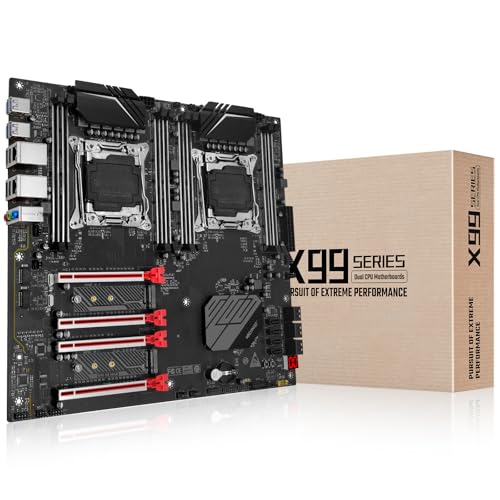 |
MACHINIST X99-D8-MAX Dual-CPU Board | Dual CPU configuration | DDR4 platform | Large E-ATX layout | View on Amazon | Read Review |
| Ten Gigabit Compact | ASRock Rack B650D4U-2L2T Server Board | Dual 10GbE ports | PCIe 5.0 support | Compact server format | View on Amazon | Read Review | |
| Memory Dense Classic | 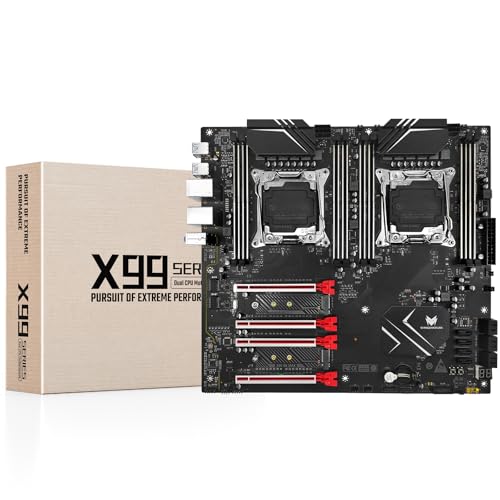 |
SHANGZHAOYUAN X99 Dual-CPU Board | Eight DDR4 ECC slots | Up to 256GB memory | Dual CPU support | View on Amazon | Read Review |
| EPYC Network Node |  |
ASRock Rack ROMED8-2T EPYC Board | EPYC 7003 support | Dual 10GbE networking | ATX compatibility | View on Amazon | Read Review |
| SP3 Expansion Platform |  |
ASRock Rack ROMED8-2T SP3 Board | EPYC SP3 support | ATX server layout | PCIe expansion | View on Amazon | Read Review |
| Xeon Scalable Base |  |
Supermicro X12SPL-F Server Board | Xeon Scalable support | ATX server format | Intel C621A chipset | View on Amazon | Read Review |
More Details on Our Top Picks
-
ASUS Pro WS WRX90E-SAGE SE Workstation
For demanding workstation builds, this board gives you an unusually wide runway. The sTR5 platform supports AMD Ryzen Threadripper PRO 7000 WX-Series processors, while ECC R-DIMM DDR5 helps suit professional rendering, simulation, and compute workloads.
Seven PCIe 5.0 x16 slots provide serious multi-GPU flexibility, and the mix of 10Gb and 2.5Gb networking supports fast storage servers and high-bandwidth file transfers. The tradeoff is its EEB form factor, which requires a large compatible chassis and careful component planning.
- Brand:ASUS
- Socket:sTR5
- Form Factor:EEB
- Memory Type:ECC R-DIMM DDR5
- Expansion Slots:7x PCIe 5.0 x16
- Network Speed:10GbE and 2.5GbE
- Additional Feature:Threadripper PRO 7000 support
- Additional Feature:PCIe 5.0 M.2 slot
- Additional Feature:Multi-GPU support
-
SHANGZHAOYUAN X99 Dual-CPU Board
Choose this platform for a dual-processor build based on Intel’s LGA 2011-3 ecosystem. Its X99 chipset and DDR4 memory support fit older Xeon-oriented workstations, lab systems, and homelab servers where established hardware matters more than current-generation connectivity.
The E-ATX layout leaves room for a two-CPU configuration, but compatibility deserves close attention before assembly. This is an older platform, so you should expect less modern I/O and expansion capability than newer PCIe 4.0 or PCIe 5.0 server boards.
- Brand:SHANGZHAOYUAN
- Socket:LGA 2011-3
- Form Factor:E-ATX
- Memory Type:DDR4
- Additional Feature:Intel X99 chipset
- Additional Feature:Dual-socket design
- Additional Feature:Xeon-oriented platform
-
ASUS W680-ACE Workstation Board
This ASUS board suits professional users who want ECC memory support and modern Intel desktop-class processing in an ATX build. Its LGA1700 socket supports compatible Intel processors, while two PCIe 5.0 x16 slots accommodate graphics, accelerator, or high-speed controller cards.
Built-in IPMI support adds remote management, a useful feature for systems installed away from your desk. The limitation is that its ATX layout offers less expansion room than larger workstation boards, especially for several full-size cards.
- Brand:ASUS
- Socket:LGA1700
- Form Factor:ATX
- Memory Type:DDR5 ECC
- Expansion Slots:2x PCIe 5.0 x16
- Network Speed:Dual 2.5GbE
- Additional Feature:Three M.2 slots
- Additional Feature:Thunderbolt 4 header
- Additional Feature:SlimSAS connector
-
ASRock Rack X570D4U-2L2T Server Board
For a compact AMD server, the X570D4U-2L2T combines a Micro-ATX footprint with the familiar AM4 ecosystem. It supports AMD Ryzen-compatible processors, DDR4 memory, SATA storage, and USB 3.2 connectivity, making it practical for storage, virtualization, and small office infrastructure.
The standout feature is its dual 10GbE networking, paired with additional gigabit connectivity for management or separate network paths. Its main limitation is the older AM4 platform, which cannot match newer B650 or SP5 boards for processor generation and PCIe bandwidth.
- Brand:ASRock Rack
- Socket:AM4
- Form Factor:Micro-ATX
- Memory Type:DDR4
- Network Speed:Dual 10GbE
- Additional Feature:AMD X570 chipset
- Additional Feature:SATA3 storage support
- Additional Feature:USB 3.2 connectivity
-
MACHINIST X99-D8-MAX Dual-CPU Board
The X99-D8-MAX is aimed at builders assembling a two-processor system around Intel’s LGA 2011-3 platform. Its DDR4 support and E-ATX format make it a candidate for older Xeon workstations, compute nodes, and budget-conscious lab hardware.
You get the appeal of multiple CPU sockets without moving to a newer platform, but that is also the catch. The legacy LGA 2011-3 ecosystem limits processor choices, memory technology, and modern expansion compared with current server boards.
- Brand:MACHINIST
- Socket:LGA 2011-3
- Form Factor:E-ATX
- Memory Type:DDR4
- Additional Feature:Intel X99 platform
- Additional Feature:Dual-socket design
- Additional Feature:Server-oriented motherboard
-
ASRock Rack B650D4U-2L2T Server Board
This board brings a Micro-ATX design and AMD’s newer AM5 platform to compact server builds. Support for Ryzen 7000 Series processors, B650E features, and PCIe 5.0 gives you a stronger foundation for virtualization, storage, and compute than older AM4 alternatives.
Its dual 10GbE ports are especially useful for network storage and fast internal transfers, while the smaller form factor helps in space-constrained enclosures. You will need to plan around Micro-ATX expansion limits, particularly if the build requires several add-in cards.
- Brand:ASRock Rack
- Socket:LGA1718
- Form Factor:Micro-ATX
- Expansion Slots:PCIe 5.0
- Network Speed:Dual 10GbE
- Additional Feature:AMD B650E chipset
- Additional Feature:Ryzen 7000 support
- Additional Feature:Single-socket design
-
SHANGZHAOYUAN X99 Dual-CPU Board
With eight DDR4 ECC slots and support for up to 256GB, this board targets older servers that need substantial memory capacity without moving to a current platform. The dual LGA 2011-3 socket design suits Xeon E5 v3 and v4 systems, while two M.2 slots add useful fast-storage options.
You also get dual gigabit LAN, SATA 3.0, and PCIe 3.0 connectivity for a familiar server configuration. Its limitation is clear: PCIe 3.0 and the aging Xeon platform leave less headroom for modern accelerators and high-speed networking.
- Brand:SHANGZHAOYUAN
- Socket:LGA 2011-3
- Form Factor:E-ATX
- Memory Type:DDR4 ECC
- Expansion Slots:PCIe 3.0
- Network Speed:Dual gigabit LAN
- Additional Feature:Two NVMe M.2 slots
- Additional Feature:SATA 3.0 connectivity
- Additional Feature:Xeon E5 v3/v4 support
-
ASRock Rack ROMED8-2T EPYC Board
Build around this board if your priority is a single-socket EPYC server with serious network throughput. Support for AMD EPYC 7002 and 7003 processors, including models with 3D V-Cache, makes it suitable for virtualization, technical computing, and data-heavy workloads.
The dual 10GbE ports provide a strong foundation for storage and high-speed infrastructure, while the ATX form factor fits more standard server and workstation cases. Its limitation is platform specificity, since SP3 processors and related components are designed for enterprise builds rather than ordinary desktop parts.
- Brand:ASRock Rack
- Socket:SP3, LGA 4094
- Form Factor:ATX
- Network Speed:Dual 10GbE
- Additional Feature:EPYC 7002 support
- Additional Feature:3D V-Cache support
- Additional Feature:Single-socket design
-
ASRock Rack ROMED8-2T SP3 Board
This ROMED8-2T version is built for AMD EPYC 7002 and 7003 processors, giving you a capable single-socket foundation for serious server workloads. Its ATX format is easier to integrate than larger enterprise boards, while SATA3 and USB 3.1 cover standard storage and peripheral duties.
The board also includes 2GbE networking and PCIe expansion for server add-in cards, offering a balanced configuration for storage or virtualization projects. As with any SP3 platform, the processor and memory ecosystem is specialized, and the board is excessive for a basic home server.
- Brand:ASRock Rack
- Socket:SP3, LGA 4094
- Form Factor:ATX
- Network Speed:2GbE
- Additional Feature:EPYC 7002 support
- Additional Feature:EPYC 7003 support
- Additional Feature:SATA3 connectivity
-
Supermicro X12SPL-F Server Board
Supermicro’s X12SPL-F is designed for a single Intel Xeon Scalable processor using the LGA 4189 socket and C621A server chipset. The ATX form factor makes it easier to fit into standard server chassis than larger dual-socket platforms, while the enterprise platform targets virtualization, storage, and infrastructure workloads.
Its main strength is compatibility with Intel’s Xeon Scalable generation, but this is not a general-purpose desktop board. The LGA 4189 ecosystem requires server-specific processor, memory, cooling, and chassis planning, and the listing does not provide enough detail to confirm its full expansion or networking configuration.
- Brand:Supermicro
- Socket:LGA 4189
- Form Factor:ATX
- Additional Feature:Single-socket design
- Additional Feature:Enterprise server platform
- Additional Feature:Supermicro server board
Frequently Asked Questions
Can I use a server motherboard in a regular PC case?
Sometimes, but check the form factor, board dimensions, mounting holes, rear I/O layout, and cooling clearance first. E-ATX and SSI-EEB boards often need larger cases than standard ATX models. Also confirm that the case supports the board’s power connectors and provides enough drive bays and airflow. A board that fits on paper may still create a very cramped, hot build.
Do server motherboards require ECC memory?
Many server boards are designed specifically for ECC memory, and some will not boot with ordinary desktop RAM. Others support both ECC and non-ECC modules, but error correction may work only with the approved memory type. Check the manual for the exact module category, such as ECC UDIMM, RDIMM, or LRDIMM. These types are generally not interchangeable, even when they share the same DDR generation.
Is a dual-socket motherboard better than a single-socket model?
A dual-socket board makes sense for workloads that need very high core counts, large memory pools, or multiple processors. It also adds cost, power consumption, cooling demands, and a more complicated NUMA memory layout. For file serving, backups, development, and many small virtualization hosts, a modern single-socket platform may provide better value and simpler administration. Buy the extra socket only when the workload or upgrade plan justifies it.
How important is IPMI or a BMC?
A dedicated BMC and IPMI support are highly useful for servers placed in a closet, rack, or remote location. You can view hardware sensors, power-cycle the system, access a remote console, and diagnose boot problems without connecting a monitor and keyboard. The feature matters less for a home server sitting beside your desk, although remote access remains convenient. Check the management interface’s security controls, firmware history, and licensing requirements before purchasing.
What PCIe version should a server motherboard have?
Choose PCIe 4.0 or PCIe 5.0 based on the devices you plan to install, not on the version number alone. Storage adapters, high-speed network cards, GPUs, and accelerators may benefit from newer standards, while many ordinary expansion cards see little practical difference. Pay close attention to the number of available PCIe lanes, their physical slot sizes, and how those lanes are shared. A board with fewer full-speed lanes can be a poor fit for several high-bandwidth cards, even if it lists many expansion slots.